How Mobile App Development UK Helps Businesses Build Locally Relevant Digital Experiences?
Wiki Article
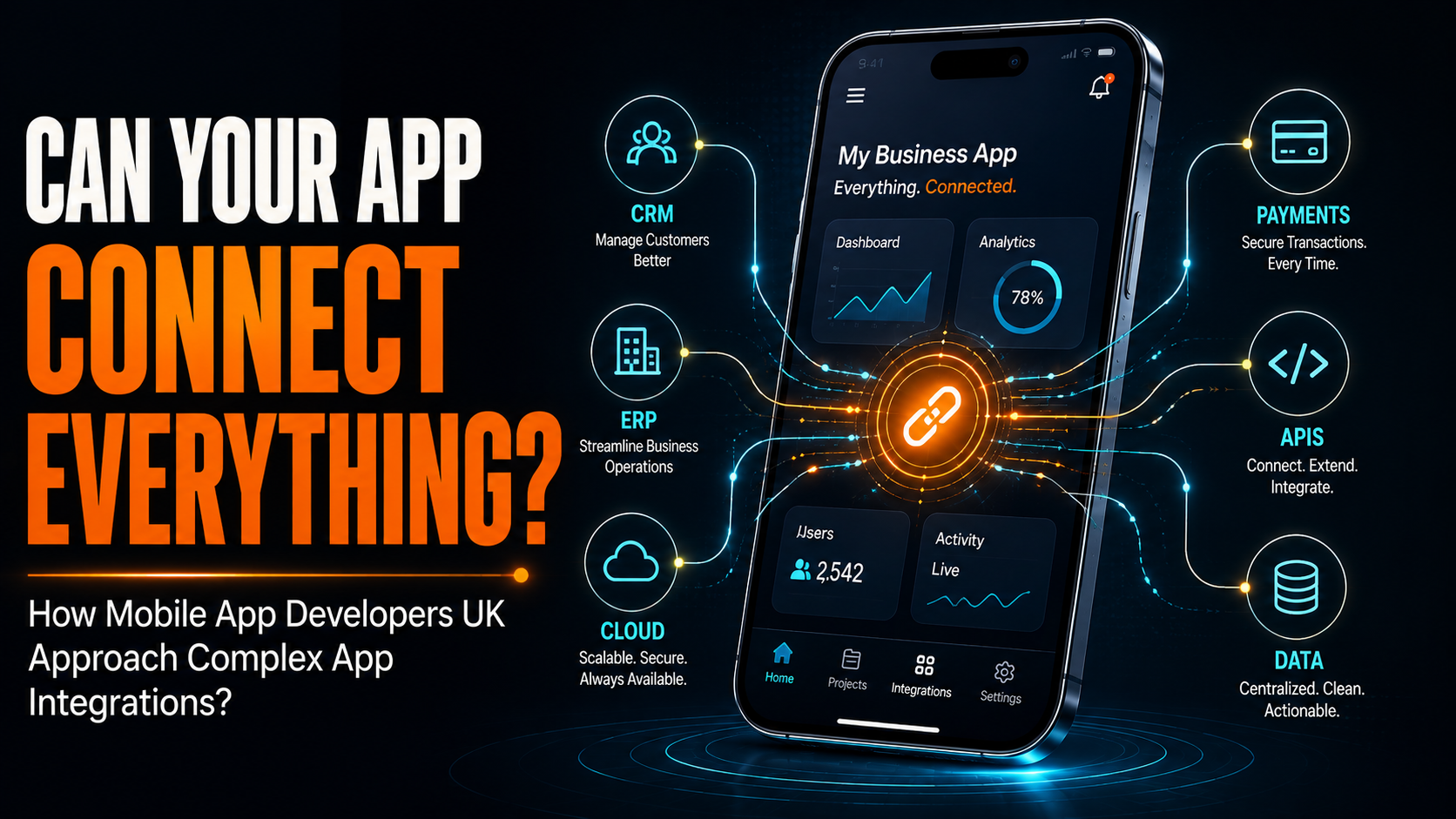
A mobile application designed for a global audience does not always provide the best experience for customers in a specific market. Users interact with digital products according to their language, location, payment preferences, cultural expectations, regulations, and everyday behaviours. A mobile app that ignores these factors can feel disconnected even when its underlying technology works perfectly.
Professional Mobile App Development UK can help businesses create applications that are better aligned with the expectations of users in the UK. Local relevance can involve much more than adding a UK location option. It can influence payment methods, location services, content, notifications, customer journeys, accessibility, compliance, and integrations with services commonly used by UK customers.
What Makes a Mobile App Locally Relevant?
A locally relevant mobile application reflects the needs and expectations of the market it serves.
For UK-focused applications, this can involve:
Local currency
UK-specific payment methods
Regional locations
Local delivery options
Relevant terminology
UK customer support
Location-based services
Appropriate privacy practices
The exact requirements depend on the industry and target audience.
Why Does Localisation Matter for UK Businesses?
Customers are more likely to engage with an application when its interface and functionality feel relevant to their environment.
For example, a UK customer may expect:
Prices displayed in pounds
UK addresses and postcodes
Local delivery information
Familiar date and time formats
Relevant customer support options
These details may appear small individually, but collectively they can influence how trustworthy and convenient an application feels.
How Can Mobile Apps Use UK Location Data?
Location services can help businesses provide geographically relevant functionality.
Applications can use location data for:
Local store discovery
Delivery tracking
Taxi booking
Service availability
Local offers
Appointment scheduling
Location-based functionality should only be used when it provides a genuine benefit to the user and should be handled according to appropriate privacy requirements.
How Does Local Payment Support Improve Mobile Experiences?
Payment preferences can vary between markets.
UK-focused applications may need to support relevant payment options such as:
Debit and credit cards
Digital wallets
Bank-based payment solutions
Recurring payments
The appropriate options depend on the business model and target customers.
A smoother local payment experience can reduce friction during checkout.
Why Is UK Currency Important?
Displaying prices in the expected currency removes unnecessary uncertainty.
For UK audiences, this generally means presenting:
Prices in pounds sterling
Appropriate currency formatting
Clear transaction amounts
Transparent fees where applicable
Currency localisation is particularly important for e-commerce, subscriptions, bookings, and financial applications.
How Can Apps Support UK Addresses and Postcodes?
Address functionality is another area where local relevance matters.
A UK-focused application may need to support:
Postcodes
UK address formats
Regional locations
Delivery areas
Address validation
This can make processes such as checkout, delivery, booking, and registration more efficient.
How Does Local Content Improve the User Experience?
Content should reflect the audience it is designed for.
Businesses may need to adapt:
Terminology
Offers
Product information
Service descriptions
Notifications
Customer support content
This does not necessarily mean creating completely different content for every region. It means ensuring the content makes sense to the intended audience.
How Can Mobile Apps Support Regional Services?
Some businesses operate across multiple UK locations.
A mobile application can help customers identify:
Nearby branches
Local service availability
Regional delivery areas
Local appointment slots
Nearby professionals
This can create a more relevant experience than presenting the same information to every user regardless of location.
How Does Personalisation Support Local Experiences?
Localisation and personalisation can work together.
For example, an application could use a customer's location and previous interactions to show:
Relevant services
Nearby stores
Appropriate delivery options
Local promotions
Region-specific information
Personalisation should remain transparent and use data responsibly.
How Can Mobile Apps Support UK Customer Journeys?
The customer journey should reflect how users actually interact with the business.
A UK service application might allow users to:
Find local service → Check availability → Book → Pay → Receive confirmation → Track service
Each stage can be adapted to local operational requirements.
How Does Accessibility Support Local Digital Experiences?
A locally relevant experience also needs to be accessible.
Developers should consider:
Readable typography
Clear navigation
Accessible forms
Appropriate contrast
Screen-reader compatibility
Touch-friendly controls
Accessibility helps businesses make applications usable by a broader audience.
Why Should UK Businesses Consider Data Protection?
Mobile applications can collect significant amounts of personal information.
Depending on the application, this may include:
Names
Contact information
Location
Payment information
Account activity
Businesses should establish appropriate privacy, security, consent, access, and data-retention practices.
Data protection should be considered during application architecture rather than added after launch.
How Can UK Apps Integrate With Local Business Systems?
Applications may need to connect with systems already used by the business.
These can include:
CRM platforms
ERP systems
Booking systems
Payment providers
Inventory platforms
Customer support software
Integration allows mobile interactions to connect with wider business operations.
For example, a customer booking through an app can automatically update the company's internal scheduling system.
How Does Localisation Help E-Commerce Apps?
E-commerce applications can use local information to simplify shopping.
A UK-focused shopping experience may include:
GBP pricing
UK delivery options
Local availability
Relevant payment methods
UK address handling
Local customer support
These features can reduce friction between product discovery and purchase.
How Can Apps Support UK-Based Delivery Services?
Delivery businesses can use location and mapping capabilities to provide relevant experiences.
Customers may be able to:
Enter UK addresses
Track deliveries
View estimated arrival times
Receive delivery notifications
Select available delivery options
The underlying system may connect the app with logistics and order-management platforms.
How Can Localisation Support Taxi and Transport Apps?
Transport applications are particularly dependent on local context.
A UK-focused transport app may need to consider:
Local pickup locations
Regional service coverage
Local payment methods
Driver availability
Real-time location tracking
Local pricing rules
The application can connect these requirements with backend systems to provide a consistent experience.
How Does Localisation Affect Notifications?
Push notifications can become more useful when they are relevant to the user's location and activity.
Examples include:
Nearby service availability
Booking reminders
Local delivery updates
Store notifications
Region-specific offers
Businesses should avoid excessive notifications because irrelevant messages can reduce engagement.
How Can Apps Adapt to Different UK Regions?
The UK is not a single uniform market in terms of customer behaviour and business operations.
Depending on the product, businesses may need to account for:
Different service coverage
Local availability
Regional delivery
Location-specific content
Different operational schedules
The degree of regional adaptation should depend on whether those differences materially affect the customer experience.
Can AI Support Locally Relevant Mobile Experiences?
Yes. AI can help personalise mobile experiences using authorised and relevant information.
Potential applications include:
Intelligent recommendations
Location-aware suggestions
Conversational customer support
Personalised search
Automated assistance
AI should use appropriate data controls and should not create assumptions about users that are unnecessary or intrusive.
How Should Businesses Test Localised Mobile Apps?
Testing should cover the actual locations and workflows the application supports.
Businesses may need to test:
UK addresses
Currency
Payment workflows
Location services
Notifications
Regional availability
Mobile devices
Network conditions
Testing with realistic UK scenarios can identify problems that generic testing may miss.
What Should Businesses Plan Before Developing a UK-Focused App?
Businesses should define:
Who the UK target users are
Which locations they serve
What local functionality is required
Which payment options are relevant
What data needs to be collected
Which systems require integration
What regional differences matter
How success will be measured
This prevents localisation from becoming a collection of superficial interface changes.
Why Local Relevance Matters for Mobile Apps in 2026?
Mobile users expect digital services to be convenient and relevant to their environment.
Businesses competing in the UK market need applications that understand practical customer requirements rather than simply reproducing a generic global experience.
Local relevance can influence trust, usability, payment completion, service discovery, and overall customer satisfaction.
Conclusion
Mobile App Development UK helps businesses build locally relevant digital experiences by adapting applications to the practical needs of UK users. This can involve currency, payment methods, addresses, location services, regional content, customer journeys, accessibility, privacy, business integrations, and local operational requirements.
The strongest approach is not to add superficial localisation at the end of development. Local requirements should influence the application architecture, user experience, integrations, data handling, and testing from the beginning.
Businesses that understand their UK audience and build around genuine local requirements can create mobile experiences that feel more useful and natural to their customers.
Businesses looking to combine locally relevant mobile applications with intelligent technologies can explore AI App Development to build personalised experiences, intelligent features, automated workflows, and connected digital products.
Frequently Asked Questions
What does mobile app development UK mean?
It refers to developing mobile applications for businesses and users in the UK, with consideration for local customer expectations, technology requirements, business operations, payments, data handling, and regional needs.
How can a mobile app be localised for UK users?
Localisation can include GBP pricing, UK addresses and postcodes, relevant payment methods, local content, location-based services, appropriate terminology, and UK-specific customer journeys.
Can UK mobile apps support location-based services?
Yes. Applications can use location functionality for services such as delivery tracking, store discovery, taxi booking, local availability, and appointment scheduling.
Why is local payment support important?
Supporting payment options appropriate to the target market can reduce checkout friction and make transactions more familiar and convenient for customers.
Can AI be used to personalise UK mobile app experiences?
Yes. AI can support recommendations, intelligent search, conversational assistance, and other personalised experiences when appropriate data is available and handled responsibly.
Report this wiki page